How to Choose the Best HVAC Filter for Your Home
Breathing easy at home or work starts with something simple: the right HVAC filter. But with so many options, picking the best one can feel like standing in a hardware aisle with a blindfold on. One wrong choice, and you might welcome more dust, allergies, and higher bills than you bargained for.
At Quality AC & Heating, we know filters are more than just a box to check. They’re the unsung heroes of comfort, air quality, and HVAC efficiency. Let’s break down what matters most—so you can choose with confidence.
Why Your HVAC Filter Choice Matters
Think of your HVAC filter as a bouncer at a club. Its job? Keep the riff-raff—dust, pollen, pet dander, and even microscopic pollutants—out of your air. But not all bouncers are created equal. The wrong filter can let trouble in or work so hard it burns out.
A good filter protects your lungs and your HVAC system. It keeps the air fresh, helps your system run efficiently, and can even keep emergency hvac calls at bay.
Types of HVAC Filters: Pros, Cons & What to Expect 🛡️
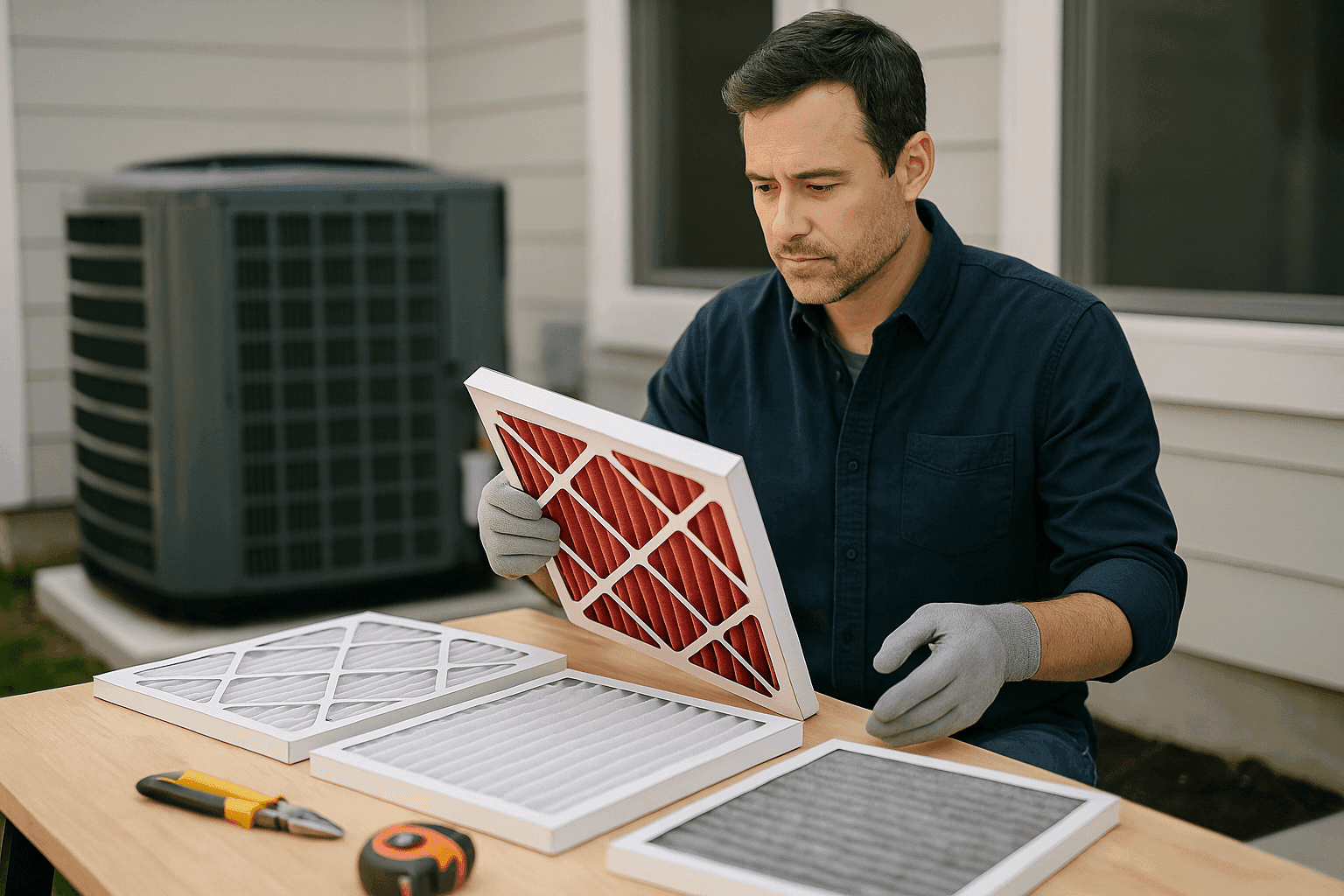
Not all filters are created equal. Here’s a breakdown to help you match your needs with the right type.
Fiberglass Filters
- What they are: Thin, flat panels made from layered fiberglass fibers.
- Pros: Cheap, widely available, easy to replace.
- Cons: Like a fishing net with big holes—catches the big stuff but lets smaller particles pass. Not great for allergies or sensitive lungs.
- Best for: Homes with no pets or allergies, or where budget is the main concern.
Pleated Filters
- What they are: Folds of polyester or cotton that increase surface area.
- Pros: Catch more dust, pollen, and mold. Still affordable. Last longer than fiberglass.
- Cons: Can restrict airflow if not changed regularly.
- Best for: Most homes and small businesses; a solid middle ground.
HEPA Filters
- What they are: High-Efficiency Particulate Air filters, used in hospitals and labs.
- Pros: Trap 99.97% of particles down to 0.3 microns—think smoke, bacteria, even some viruses.
- Cons: Not all HVAC systems can handle them; may require system upgrades or modifications.
- Best for: Allergy sufferers, people with respiratory issues, or anyone wanting the cleanest air possible.
Electrostatic Filters
- What they are: Use static electricity to attract particles.
- Pros: Washable versions save money over time. Good at trapping small stuff.
- Cons: Must be cleaned regularly. Some reusable types can harbor mold if not dried well.
- Best for: Homes with pets, smokers, or those who want to reduce waste.
Understanding MERV Ratings: What Those Numbers Really Mean
MERV stands for Minimum Efficiency Reporting Value. It’s a scale from 1 to 20 that tells you how well a filter catches particles.
- MERV 1–4: Basic protection. Think large dust and lint. Not great for health or system efficiency.
- MERV 5–8: Good for most homes. Catches dust mites, mold spores, and some pollen.
- MERV 9–12: Better filtration—great for allergies, pet homes, or small businesses.
- MERV 13–16: Hospital-grade. Traps bacteria, smoke, and fine dust. May restrict airflow in older systems.
- MERV 17–20: Used in clean rooms and labs. Overkill for most homes; can choke standard HVAC systems.
Common Myths About MERV Ratings
- Higher is always better: Not true. Too high, and your system may struggle to breathe—like running a marathon with a straw.
- All systems can handle any filter: Some units can’t push air through high-MERV filters. Always check your system’s specs or ask a professional.
How Long Do Filters Last? The Truth About Lifespan
Filter life depends on type, home size, pets, and usage.
- Fiberglass: 30 days—swap it with the calendar.
- Pleated: 60–90 days, sometimes longer in small homes.
- HEPA: Up to 12 months, but check monthly.
- Electrostatic (washable): Clean every month; replace if damaged.
If you have pets, allergies, or run your system year-round, check more often. Dirty filters strain your system, spike your bills, and can even cause breakdowns—leading to emergency hvac calls.
Filter Fit: Compatibility Matters
A filter that’s the wrong size is like wearing shoes two sizes too big. Air will sneak around it, carrying dust and allergens with it.
- Measure your old filter: Length, width, and depth.
- Check your system’s manual: Some systems require specific types or sizes.
- When in doubt: Bring your old filter to the store, or snap a photo.
Maintenance Tips: Keeping Air Clean and Systems Strong 🧰
Changing your HVAC filter is one of the simplest, most effective ways to keep your air clean and your system healthy.
- Set a reminder: Use your phone or a sticky note on the calendar.
- Check monthly: Especially during peak seasons (summer and winter).
- Look for dust buildup: If you see gray fuzz, it’s time for a change.
- Listen for odd noises: Whistling or rattling can mean the filter is clogged.
- Don’t reuse disposable filters: Only washable electrostatic types are meant to be cleaned and reused.
Health Benefits: Beyond Just Clean Air
A good filter does more than trap dust. It can:
- Reduce allergy and asthma symptoms
- Lower the risk of respiratory infections
- Remove pet dander, smoke, and odors
- Protect against mold spores and bacteria
The Environmental Protection Agency (EPA) recommends regular filter changes to maintain healthy indoor air—especially for homes with children, elderly residents, or anyone with breathing issues.
Seasonal Considerations: When to Upgrade or Change Filters
- Spring: Pollen is high. Upgrade if allergies are a problem.
- Summer: AC runs more. Check filters monthly.
- Fall: Dust and debris from open windows. Swap filters before turning on heat.
- Winter: Closed windows mean stale air. Use a higher MERV filter if possible.
Quick Safety Checklist for Filter Changes
- Turn off your HVAC system before changing the filter.
- Use gloves if you’re sensitive to dust or mold.
- Dispose of old filters in a sealed bag.
- Never force a filter that doesn’t fit—get the right size.
- If you see mold or heavy debris, consider a professional duct cleaning.
DIY vs. Call a Pro: When to Get Help
Changing a filter is usually a quick DIY task. But some situations call for a pro:
- You’re not sure which filter your system needs.
- The filter is stuck or hard to reach.
- You notice mold, strange smells, or excessive dust.
- Your system shuts down or makes odd noises after a filter change.
A professional can recommend the best filter for your needs, check for system issues, and even perform an indoor air quality test.
What Pros Do On Arrival
When you call Quality AC & Heating for filter help or indoor air quality concerns, here’s what you can expect:
- Inspect your HVAC system for fit and compatibility.
- Recommend the best filter based on your needs (pets, allergies, business use).
- Check airflow and system performance.
- Look for signs of mold, leaks, or damage.
- Offer tips for ongoing maintenance and filter changes.
Prevention & Maintenance: Keep Problems at Bay
- Change filters regularly—don’t wait for dust bunnies to take over.
- Schedule annual HVAC maintenance to catch problems early.
- Consider duct cleaning if you notice persistent dust or allergies.
- Use high-quality filters if you have pets, allergies, or respiratory conditions.
- Keep vents and returns clear of furniture and dust.
Costs & Time Factors: What to Expect
- Filters: Range from a few dollars (fiberglass) to $50+ (HEPA or specialty).
- Time: Most filter changes take 5–10 minutes.
- Professional service: May include filter replacement, system check, and air quality testing. Costs vary by service and filter type.
Remember, a clean filter can save you money by reducing energy use and preventing costly emergency hvac repairs.
When It’s an Emergency
If your HVAC system shuts down, blows dirty air, or you notice burning smells, don’t wait. A clogged filter can cause overheating, frozen coils, or even system failure.
- Turn off your system.
- Check and replace the filter if possible.
- If the problem persists, call for emergency hvac service.
FAQ: Common Questions About HVAC Filters
How do I know which filter size I need?
Check your old filter for size markings, or measure length, width, and depth. If in doubt, your system’s manual or a professional can help.
Are expensive filters always better?
Not always. The best filter is the one that fits your system and matches your air quality needs. Too high a MERV rating can strain older systems.
How often should I change my filter?
Most homes need a new filter every 1–3 months. Check monthly, especially if you have pets, allergies, or run your system often.
Can I wash and reuse my filter?
Only if it’s a washable electrostatic filter. Disposable filters should never be washed or reused.
Special Considerations for Your Home or Business
- Pets: More hair and dander means more frequent filter changes.
- Renovations: Dust from construction can clog filters fast—check weekly.
- Allergies or asthma: Use a higher MERV filter, but make sure your system can handle it.
- Businesses: High-traffic areas = more dust and debris. Change filters more often and consider professional air quality testing.
The right filter is a small investment with big rewards—cleaner air, fewer allergies, and less chance of emergency hvac breakdowns.
Call Quality AC & Heating now — or reach us anytime at 1-888-231-8820 .